The Costa del Sol's best beaches, from Nerja to Sotogrande
An east-to-west guide to the coast's beaches, from the cliffs of Maro to the dunes of Cabopino and the wild sands beyond Sotogrande, with the 2026 Blue Flag list and seasonal advice.
How to read this coast
The Costa del Sol runs for roughly 160 kilometers from the cliffs east of Nerja to the river mouth at Sotogrande, and the beaches change character every few miles. In the east the sand is dark and the water clearer; around Málaga and Torremolinos the beaches are wide, urban and lively; from Marbella west they become more manicured, with beach clubs and dunes; and past Estepona the coast turns wilder again toward the Strait. In 2026 Málaga province was awarded 45 Blue Flags, the most of any Andalusian province, with Málaga city and Marbella leading the list and Torremolinos and Fuengirola close behind. The swimming season runs from June to October; the water is at its warmest in August and September and still pleasant in early October.
Nerja and the eastern cliffs
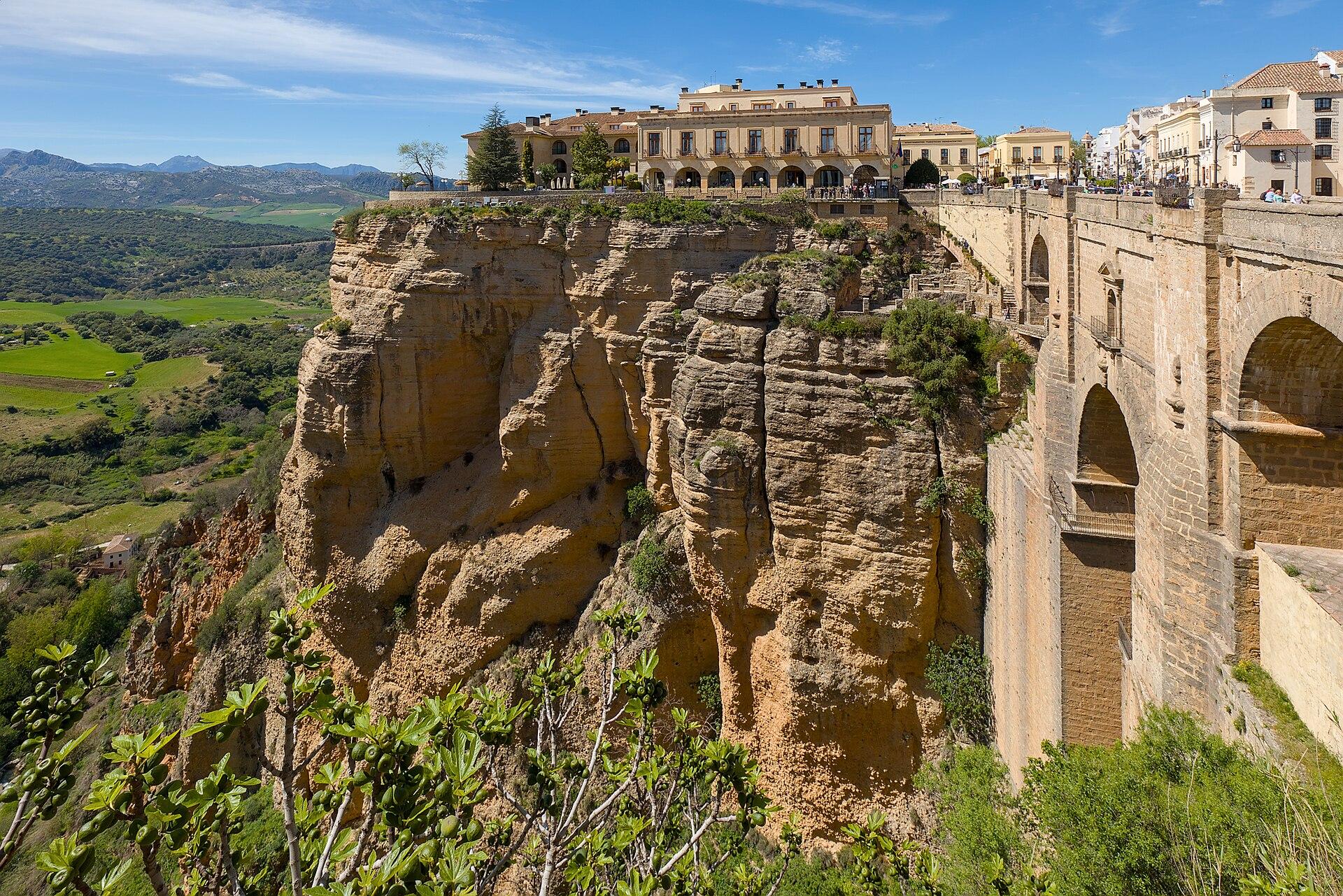
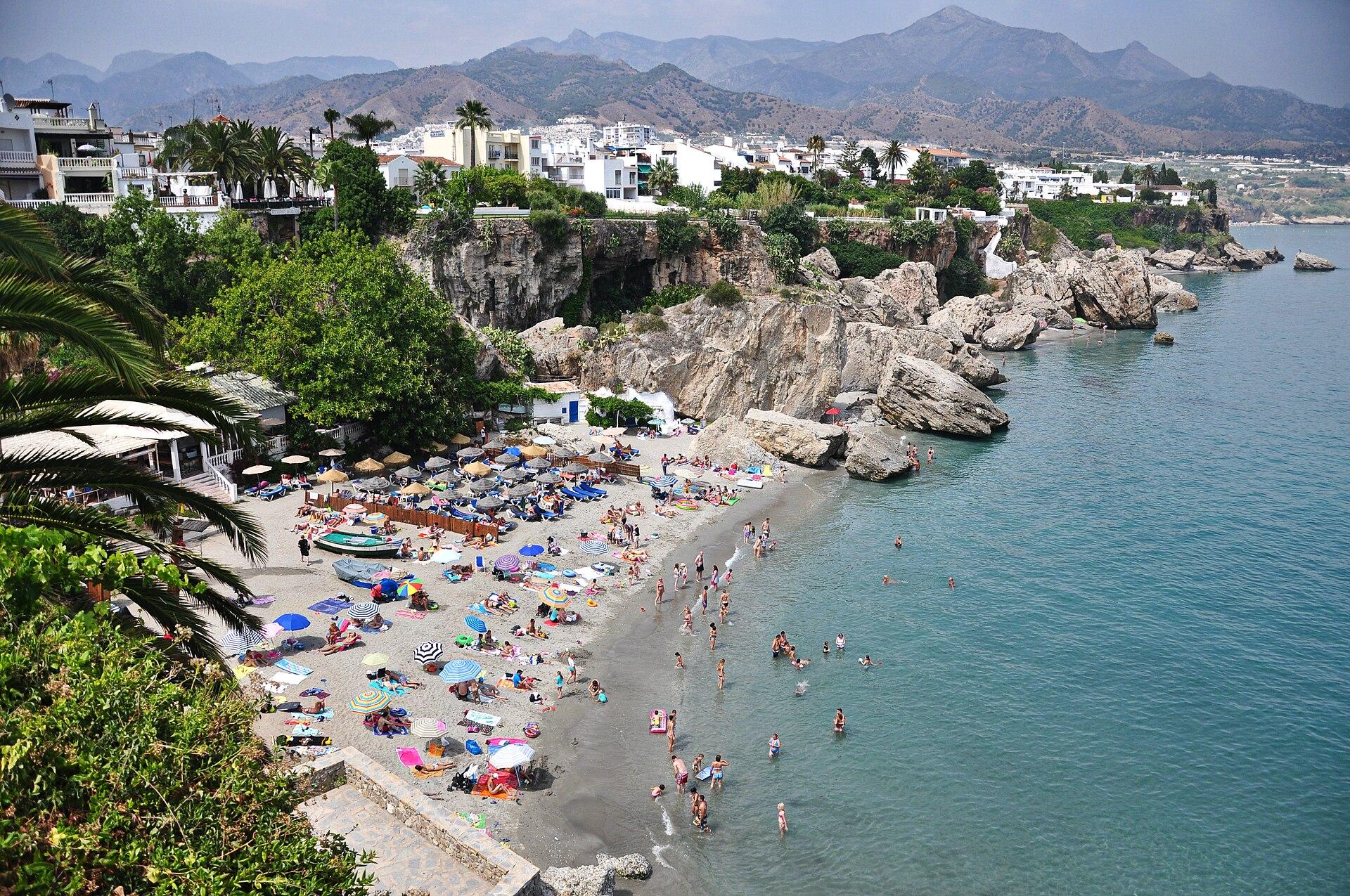
Nerja's Playa de Burriana is the best-equipped beach in the east: about 800 meters of coarse sand below a promenade of restaurants, with kayaks for hire and paella houses that have been there for decades. Just along the coast, Playa de Calahonda sits beneath the Balcón de Europa viewpoint, and east of town the small coves of Maro lie within the Acantilados de Maro-Cerro Gordo, a protected stretch of cliffs rising up to 75 meters above a sea clear enough for snorkeling. Nerja is about an hour and a quarter from Marbella by car on the A-7 and has no train.
Málaga city
Málaga's beaches are urban but good, and seven carry Blue Flags: La Malagueta beside the port, Pedregalejo and El Palo in the old fishing district, La Caleta, El Dedo, Misericordia and San Andrés. Pedregalejo and El Palo are where to go for espetos, sardines grilled on skewers over open fires in old boats, in a row of chiringuitos along a promenade. All are reachable by city bus or on foot from the center.
Torremolinos, Benalmádena and Fuengirola
The Cercanías train from Málaga serves this whole stretch. Torremolinos' La Carihuela is the former fishing quarter and the best beach in town for atmosphere and fish restaurants; Benalmádena's beaches run beside the Puerto Marina; and Fuengirola has seven kilometers of continuous sand along the Paseo Marítimo Rey de España, which is flat, well lit and ideal for an evening walk. These are family beaches with lifeguards, showers and lounger hire, and they are busy from July through August.
Mijas Costa and Marbella's east
Between Fuengirola and Marbella the beaches become quieter. La Cala de Mijas has a compact village beach and a watchtower, and Calahonda and El Chaparral are backed by low pines rather than high-rises. Marbella's best beach is arguably Cabopino, on the eastern edge of the municipality: a wide stretch of sand beside a small marina, with the Dunas de Artola behind it, a natural monument since 2001 that preserves more than 20 hectares of dunes and pine wood crossed by wooden boardwalks. The eastern end has a naturist section.
Marbella's Golden Mile and Puerto Banús
Nagüeles, behind the Golden Mile hotels, and the beaches on either side of Puerto Banús are where the coast's beach-club culture is concentrated: loungers, restaurants and music, with a price to match. They are fine for swimming, but the sand is darker and coarser than people expect, and the sea is often calmer here than further east. The Senda Litoral, a coastal path and boardwalk being completed along the whole province, links most of Marbella's beaches on foot.
Estepona and Manilva
Estepona's town beach, La Rada, runs the length of its promenade and is lined with palms and sculptures; Playa del Cristo, a sheltered cove west of the port, is the family favorite because the water is shallow and calm. Beyond the town the coast opens out, with long, less crowded beaches at Bahía Dorada and, in Manilva, around Sabinillas and the rocky coves of Punta Chullera.
Sotogrande and the Strait
At the far western end, in the province of Cádiz, Torreguadiaro is a 1.3-kilometer beach of dark sand facing the Sotogrande marina, and Alcaidesa, beyond it, is a wild beach with views of the Rock of Gibraltar and the mountains of Morocco. The sea is cooler and the wind stronger here, which is why kitesurfers love it and sunbathers should check the forecast.
Practical notes
Blue Flag beaches have lifeguards in season, usually from mid-June to mid-September. Jellyfish arrive in warm spells; the flags on the lifeguard posts indicate conditions. Parking near the best beaches is difficult in summer, so arrive before 11 am or come by train and taxi.
Sources
- https://andaluciainforma.eldiario.es/?p=29265
- https://www.malagacar.com/sp/blog/ocio/playas-bandera-azul-costa-del-sol/
- https://esnerja.com/en/things-to-do/maro-cerro-gordo-cliffs
- https://www.andalucia.org/en/marbella-natural-spaces-dunas-de-artola-o-cabopino
- https://www.spain.info/es/playa/torreguadiaro/